Welcome to Irby Dental Practice. If you’re reading this, you might be feeling a bit anxious about an upcoming root canal procedure. Rest assured, our goal is to provide you with all the information you need to feel confident and calm. In this guide, we’ll explain what a root canal is, why it’s necessary, what the procedure involves, and how to take care of yourself afterward.
What is a Root Canal?
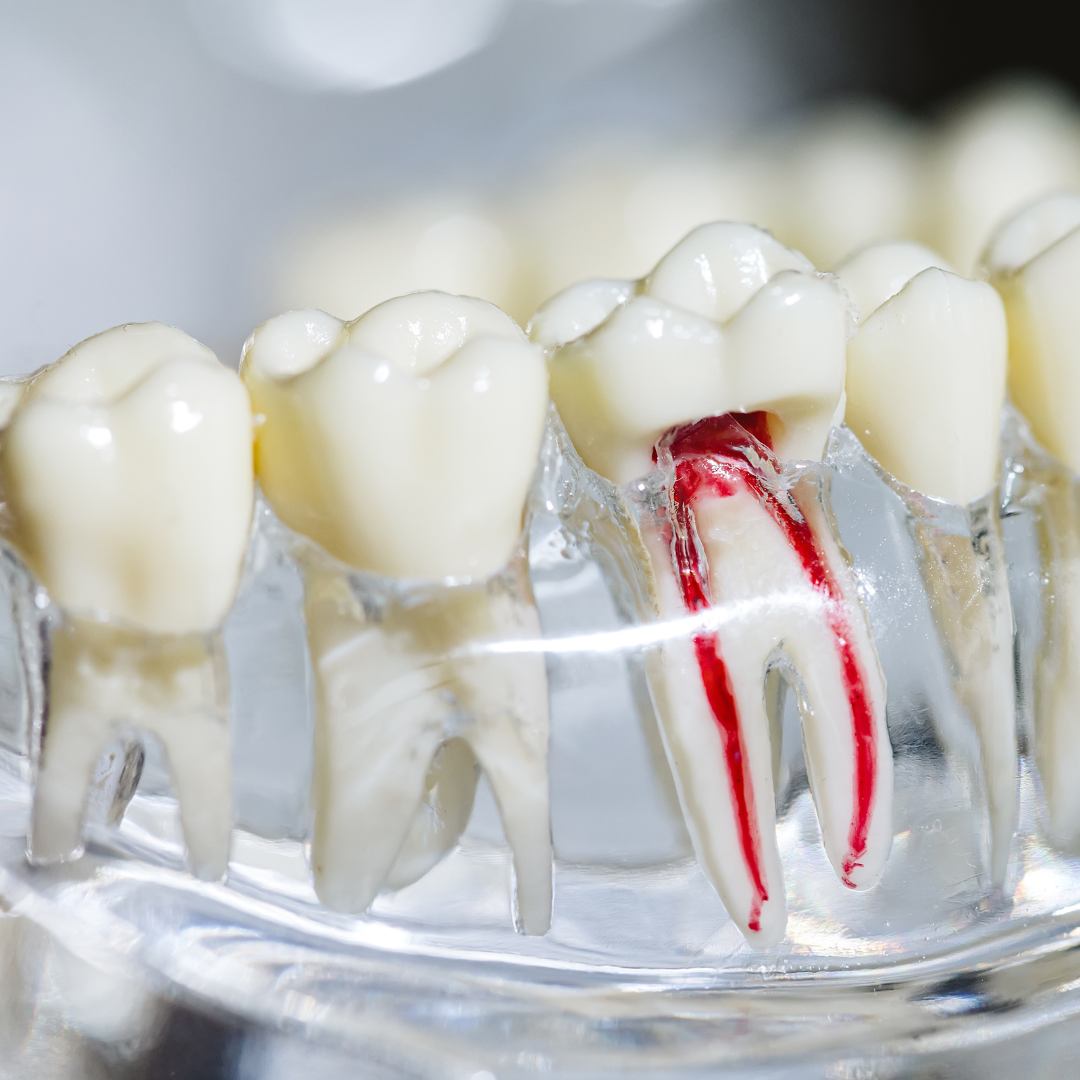
A root canal is a dental procedure designed to treat infection at the centre of a tooth, known as the pulp. This treatment is often necessary when the pulp becomes inflamed or infected due to deep decay, repeated dental procedures, faulty crowns, or a crack or chip in the tooth. Understanding the anatomy of a tooth can help clarify why this procedure is essential.
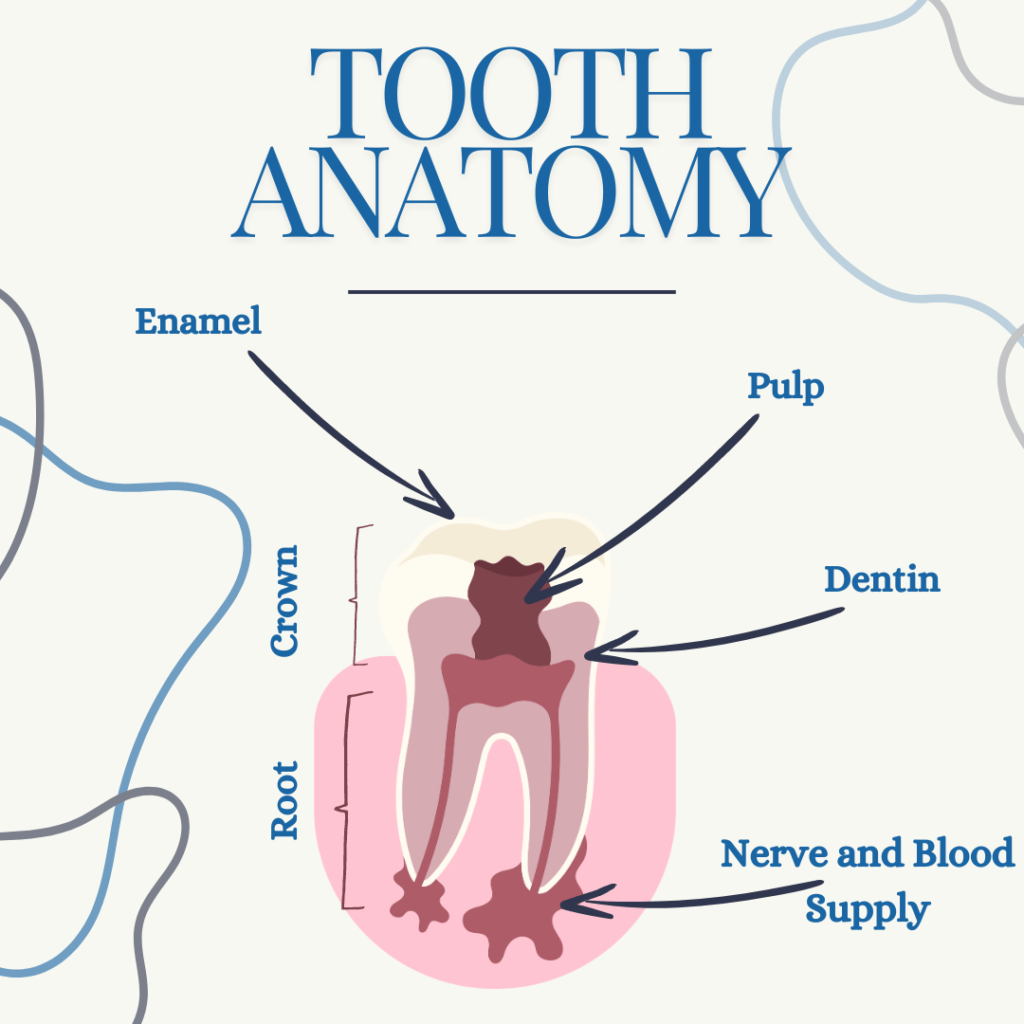
Anatomy of a Tooth
The tooth consists of several layers:
Enamel: The hard, outer surface of the tooth.
Dentin: The layer beneath the enamel.
Pulp: The soft tissue inside the tooth that contains nerves and blood vessels.
Root Canals: The parts of the pulp that extend into the roots of the tooth.
When the pulp is damaged, it can lead to severe pain or an abscess. A root canal procedure removes the infected pulp, cleans and shapes the inside of the tooth, and seals it to prevent further infection.
Reasons for Needing a Root Canal
Understanding why a root canal might be necessary can help alleviate some concerns. Here are common reasons for needing this procedure:
Common Causes
Several factors can lead to the need for a root canal, including:
Deep Decay: Untreated cavities that reach the pulp.
Repeated Dental Procedures: Multiple treatments on the same tooth.
Faulty Crowns: Poorly fitted crowns that allow bacteria to enter the tooth.
Cracks and Chips: Damage to the tooth that exposes the pulp to bacteria.
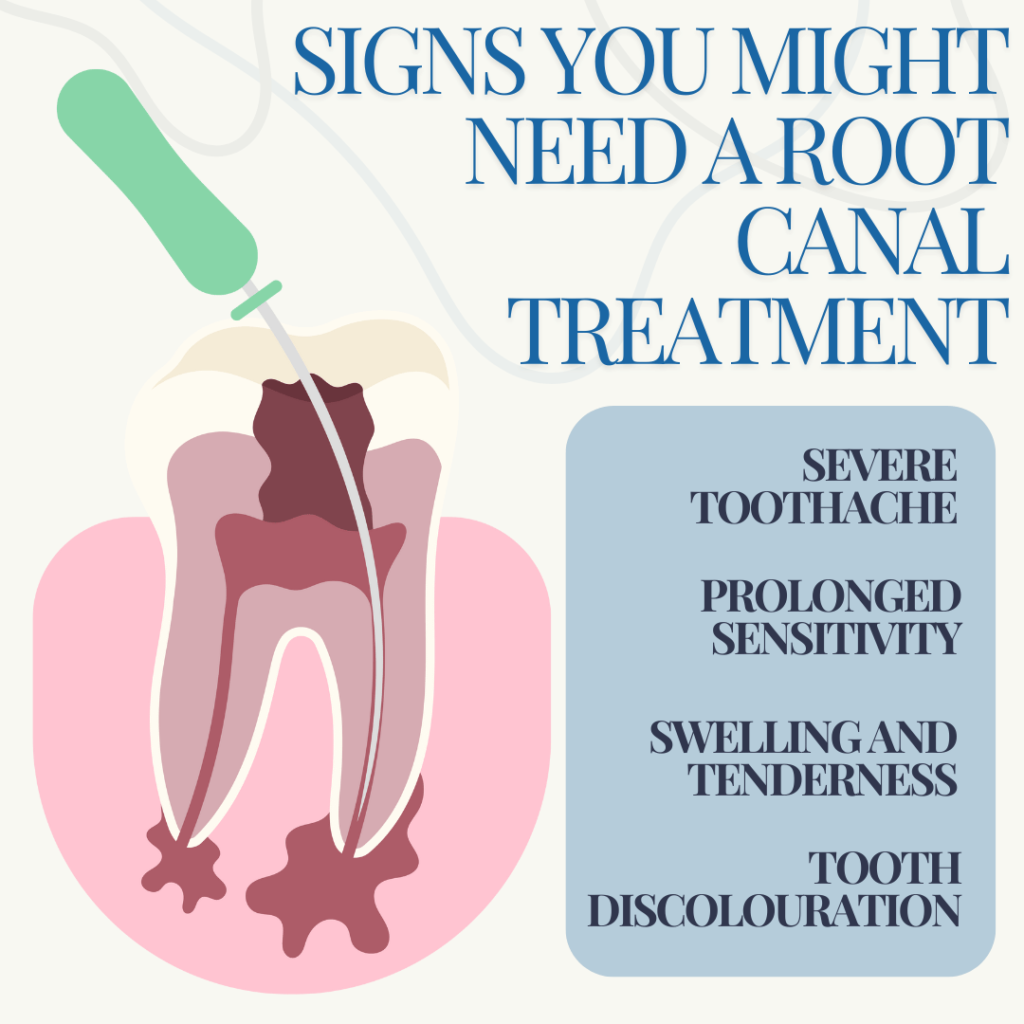
Symptoms Indicating a Root Canal May Be Needed
Symptoms that may indicate the need for a root canal include:
Severe Toothache: Persistent pain, especially when chewing or applying pressure.
Prolonged Sensitivity: Lingering sensitivity to hot or cold temperatures.
Tooth Discolouration: Darkening of the tooth, often due to internal damage.
Swelling and Tenderness: In the nearby gums, sometimes accompanied by a recurring pimple on the gums.
The Root Canal Procedure
Understanding the steps involved in a root canal can help you feel more at ease. Here’s what you can expect:
Preparation for the Procedure
Initial Consultation and Examination
Your dentist will review your medical history and conduct a thorough examination of your teeth. X-rays will be taken to assess the extent of the damage and to plan the procedure.
X-Rays and Their Importance
X-rays help the dentist see the shape of the root canals and determine if there are any signs of infection in the surrounding bone.
Pre-Procedure Instructions
Your dentist will provide specific instructions, such as eating before the procedure if you’ll be receiving anaesthesia, and taking any prescribed medications.
Step-by-Step Process
Administering Local Anaesthesia
To ensure you’re comfortable and pain-free during the procedure, your dentist will administer local anaesthesia to numb the affected tooth and surrounding area.
Isolation of the Tooth Using a Dental Dam
A small rubber sheet, known as a dental dam, is placed around the tooth to keep it clean and dry during the procedure.
Accessing the Pulp Chamber and Cleaning the Root Canals
An opening is made in the crown of the tooth to access the pulp chamber. The dentist then uses small instruments to remove the infected or inflamed pulp.
Shaping the Canals and Disinfecting the Area
The root canals are cleaned, shaped, and disinfected to remove any remaining bacteria and prevent future infection.
Filling and Sealing the Canals
The cleaned and shaped canals are filled with a biocompatible material called gutta-percha. This is sealed with an adhesive cement to ensure a complete seal.
Temporary or Permanent Filling Placement
A temporary filling is placed to close the opening until a permanent restoration (like a crown) is placed.
Duration of the Procedure
The duration of the procedure varies but typically:
Typical Time Frame
Most root canal procedures can be completed in one to two visits, each lasting about 90 minutes.
Factors Influencing Duration
The complexity of the root canal system, the severity of the infection, and whether additional treatments are needed.
Aftercare and Recovery
Proper aftercare is crucial for a smooth recovery and the long-term success of your root canal.
Post-Procedure Expectations
After the procedure:
Immediate Effects of the Anaesthesia Wearing Off
Once the anaesthesia wears off, you may experience some tenderness and mild pain in the treated area.
Common Post-Procedure Sensations
It’s normal to feel some sensitivity or discomfort for a few days after the procedure. This can usually be managed with over-the-counter pain relievers.
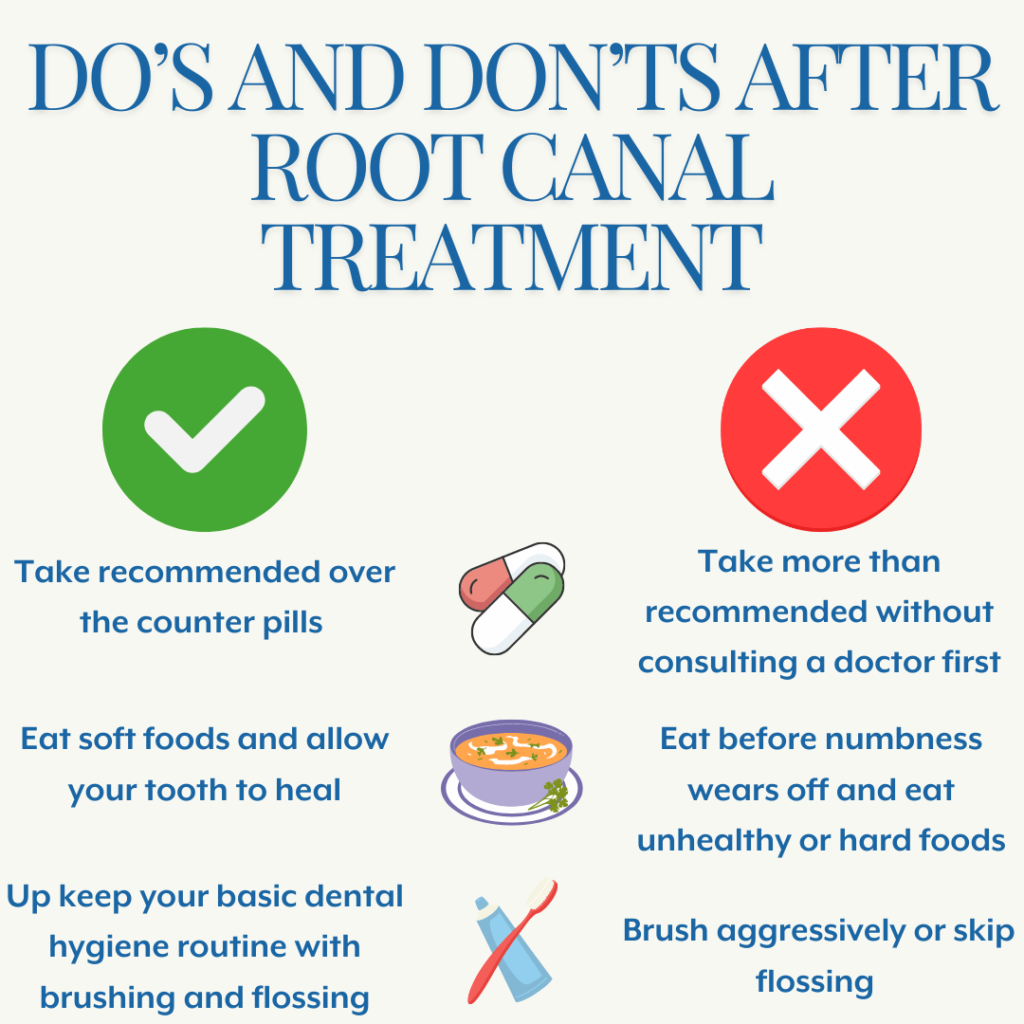
Dos and Don’ts After a Root Canal
Following these guidelines can aid in recovery:
Recommended Pain Relief Methods
Take any prescribed medications as directed and use over-the-counter pain relievers like ibuprofen or acetaminophen to manage discomfort.
Eating and Drinking Guidelines
Avoid eating until the numbness wears off to prevent biting your cheek or tongue. Stick to soft foods and avoid chewing on the treated tooth until it’s fully restored with a crown.
Importance of Maintaining Oral Hygiene
Continue to brush and floss regularly to keep your mouth clean and prevent further infection.
Follow-Up Care
Importance of Follow-Up Appointments
Follow-up visits are essential to ensure the tooth is healing properly and to complete the restoration process.
Possible Need for a Crown or Other Restorative Treatment
Your dentist will likely recommend placing a crown on the treated tooth to protect it and restore its function.
Long-Term Care for the Treated Tooth
With proper care, a tooth that has undergone a root canal can last a lifetime. Regular dental check-ups and good oral hygiene are key.
Addressing Common Concerns
It’s natural to have concerns about a root canal. Here, we address some of the most common ones:
Pain Management
Modern Advancements in Pain Relief
Thanks to advancements in dental technology and anaesthesia, root canals today are no more uncomfortable than getting a filling.
Comparison to Other Dental Treatments
Many patients report that a root canal is less painful than they expected, often comparing it to getting a routine filling.
Effectiveness and Longevity
Success Rates of Root Canals
Root canals have a high success rate, with many treated teeth lasting a lifetime with proper care.
Longevity of the Treated Tooth
A tooth that has undergone a root canal and is properly restored can remain healthy and functional for many years.
Risks and Complications
Potential Risks
While complications are rare, they can include infection, damage to surrounding teeth or tissues, or a failure to fully remove all infected tissue.
Mitigation of Risks by the Dentist
Choosing a skilled and experienced dentist, like those at Irby Dental Practice, greatly reduces these risks.
Tips for Reducing Anxiety
Feeling nervous about a root canal is normal. Here are some tips to help ease your anxiety:
Choosing the Right Dentist
Importance of a Skilled and Experienced Endodontist
A qualified endodontist has the specialised training to perform root canals efficiently and effectively.
Questions to Ask Your Dentist
Ask about their experience, the technology they use, and what you can expect during and after the procedure.
Mental Preparation
Techniques for Relaxation and Stress Reduction
Practice deep breathing, visualisation, or listen to calming music before and during the appointment.
Bringing a Friend or Family Member for Support
Having a trusted person with you can provide emotional support and help you feel more at ease.
Educational Resources
Trusted Sources for Additional Information
Look for information from reputable dental associations or organisations, such as the British Dental Association.
Benefits of Watching Educational Videos or Reading Patient Testimonials
Learning about others’ positive experiences can help reassure you about the procedure.
Conclusion
At Irby Dental Practice, we are committed to ensuring your comfort and confidence when undergoing a root canal. The procedure is a highly effective way to save a damaged tooth and alleviate pain. By understanding the process, preparing adequately, and following aftercare instructions, you can ensure a smooth recovery and long-term dental health.
Additional Resources
For further information and support, consider these resources:
Online communities where you can share experiences and gain support from others who have undergone root canals. Reddit and Quora are good chat platforms where people share their experiences.
We hope this guide has provided you with the information you need to feel more confident and less anxious about your root canal procedure. Remember, our team at Irby Dental Practice is here to support you every step of the way.
Book your dental appointment with Irby Dental Practice today to boost your confidence and smile.