
If you’re exploring ways to replace missing teeth, you’ve likely come across two main options: dental implants and dentures. But how do we actually choose between them?
It’s not just about appearance—it’s about how your teeth feel, function, and fit into your daily life. Eating your favourite foods, speaking confidently, and maintaining your oral health all play a role in this decision.
In this guide, we’ll break down the real differences between dental implants and dentures—from comfort and maintenance to cost and lifestyle impact. By the end, you’ll have a clearer understanding of which option may suit you best.
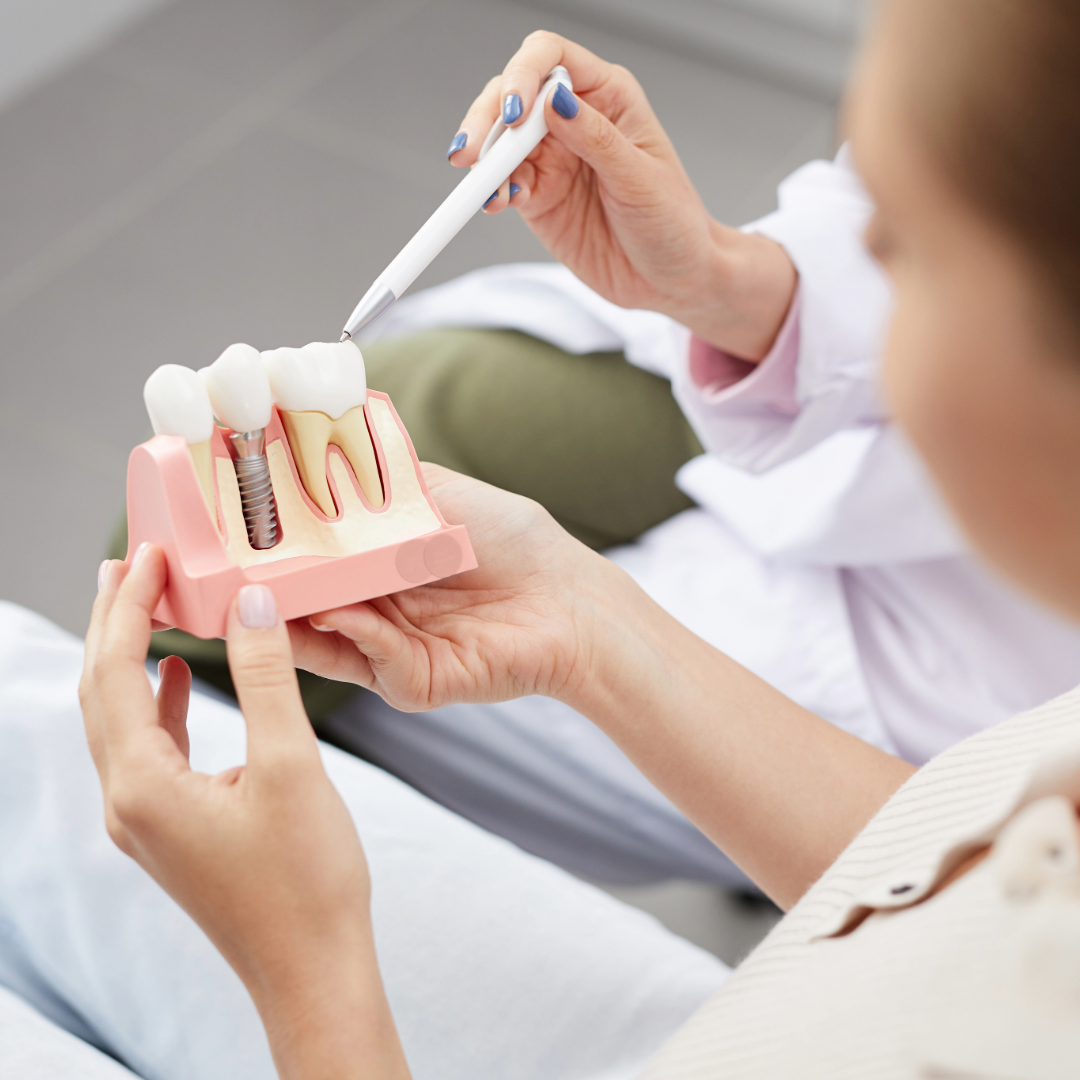
Dental implants are a fixed solution that replaces both the root and crown of a missing tooth. A titanium post is placed into the jawbone, creating a stable base for a natural-looking tooth.
Permanent and non-removable
Designed to function like natural teeth
Supports long-term oral health
Dentures are removable appliances that sit on top of your gums and replace multiple missing teeth.
Removable and easy to take out
Available as partial or full sets
Faster solution for tooth replacement
One of the biggest differences becomes clear in everyday life.
With dental implants, most patients tell us that after a short adjustment period, they stop thinking about them altogether. They don’t move, they don’t need to be removed, and they behave very much like natural teeth. Eating, speaking, and smiling all feel intuitive.
Dentures can take a little more getting used to. Because they sit on the gums rather than being fixed in place, there can be some movement—especially at the beginning. Over time, most patients adapt well, but it’s not uncommon to notice them when eating certain foods or speaking quickly.
That said, modern dentures are far more refined than they used to be, and when well-made, they can still offer a comfortable and natural-looking result.
Food is often where the difference is most noticeable.
Dental implants allow you to bite and chew with confidence. Whether it’s a crisp apple or a steak, there’s very little you need to avoid. Because they’re anchored in the jaw, they provide a level of strength that closely mimics natural teeth.
With dentures, there may be a period of adjustment. Softer foods are usually recommended at first, and some patients choose to avoid particularly hard or sticky items long term. Speech can also take a little practice, though this typically improves quickly.
Confidence plays a big role here too. For many patients, knowing their teeth won’t shift or move gives them a greater sense of ease in social situations.
For trusted, general advice on maintaining oral health with either option, resources from the NHS can be helpful alongside regular dental visits.

Another key difference lies in how each option fits into your daily routine.
Dental implants are cared for much like natural teeth. Brushing, flossing, and routine check-ups are usually all that’s required. There’s no need to remove them or use additional products, which makes them a convenient long-term solution.
Dentures require a more hands-on approach. They need to be removed and cleaned daily, and most patients soak them overnight. It’s a simple routine once you get used to it, but it does add an extra step to your day.
Guidance from organisations like the British Dental Association highlights the importance of proper denture hygiene to maintain both comfort and oral health.
One of the less obvious—but important—differences is what’s happening beneath the gums.
Dental implants actively support the jawbone. Because they replace the root of the tooth, they help stimulate the bone and maintain its structure over time. This can play a role in preserving facial shape and preventing the “sunken” look sometimes associated with tooth loss.
Dentures don’t provide this same stimulation. Over time, the jawbone can naturally shrink, which may affect how dentures fit and feel. This is why adjustments or replacements are sometimes needed as the years go on.
The process of getting implants versus dentures also differs.
Dental implants involve a more detailed treatment plan, including a minor surgical procedure and a healing period. While this takes longer, it allows for a highly tailored and stable result.
Dentures are typically quicker to provide and don’t require surgery, making them a suitable option for those who prefer a more immediate solution.
Neither approach is “better” universally—it simply depends on your preferences, health, and goals.
Choosing between dental implants and dentures is about more than replacing missing teeth—it’s about deciding how you want to live day to day.
Dental implants offer a seamless, natural experience that closely mirrors real teeth, while dentures provide a practical and effective solution that can be delivered more quickly and with less initial commitment.
The right option will always depend on your individual circumstances. That’s why we take the time to understand your needs, answer your questions, and guide you towards a solution that feels right for you.
If you’re considering dental implants vs dentures in Irby and want honest, tailored advice, we’re here to help.
📞 Contact Irby Dental Practice today to arrange your consultation and take the next step towards a confident, comfortable smile.